
The primary reasons why a diamond saw blade fails to cut can be attributed to the following factors:
(1) The hardness of the bonding agent is too high relative to the material being processed; verify the saw blade's specifications to ensure they are compatible with the workpiece material.
(2) The saw blade was not "dressed" (sharpened) prior to use.
(3) The equipment lacks sufficient power; the drive belt for the main motor may require tightening.
(4) Ensure that the saw blade is rotating in the correct direction.
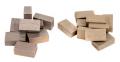
During the cutting process, microscopic cracks may develop on the surface of the segments; in severe cases, the segments may fracture, rendering the diamond saw blade unusable.
The primary cause of segment fracture is that the hardness of the segment's metal bonding agent is significantly higher than that of the workpiece material. This results in the saw blade being subjected to a "hammering" effect during cutting; consequently, segments utilizing a softer bonding agent should be employed.
Another contributing factor is excessive peripheral speed of the diamond saw blade. When the rotational speed is too high, the blade is subjected to excessive impact forces, leading to segment fracture; therefore, the saw blade's rotational speed should be adjusted to an appropriate level.