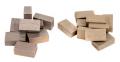

Diamond segments play a vital role across various industries, particularly in stone processing enterprises. Diamond crystals are embedded within these segments—but do you know their purpose?
Diamond crystals exhibit significant variation, ranging from fully intact cubic octahedral structures to partially complete, irregular shapes, and even fragmented crystal pieces. Based on experience, when crystals endure heavy loads, the most suitable product utilizes exceptionally robust, fully cubic octahedral diamond crystals. These crystals minimize contact area during segment operation while offering superior fracture resistance, thereby reducing equipment power consumption and extending tool life.
Impact strength is influenced by crystal characteristics, particle size, impurities, and other factors. When selecting diamonds, comprehensively consider tool design, bond properties, workpiece material characteristics, machine operating power, required cutting efficiency, and service life to choose diamonds with suitable impact strength. Typically, when cutting harder materials, diamond segments capable of withstanding greater impact strength should be selected.
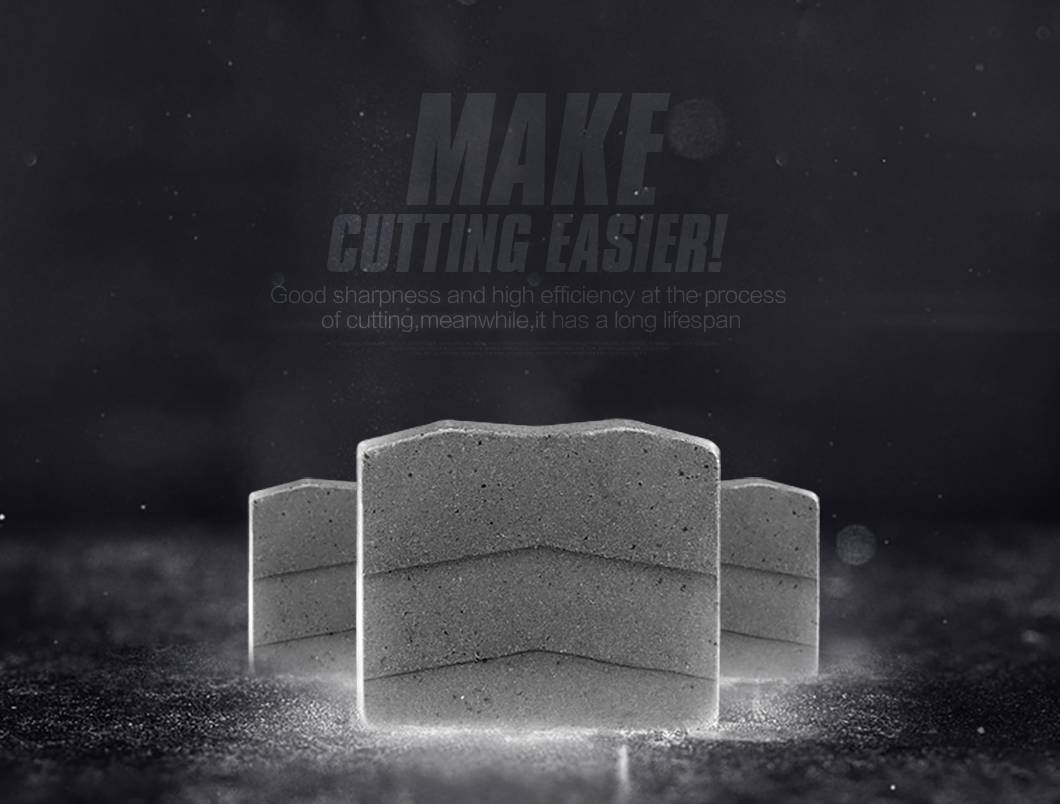
Poor performance of diamond segments affects work efficiency. How can diamond segment performance be improved?
1. Utilize ultrafine powders and pre-alloyed powders. Ultrafine powders facilitate lower sintering temperatures and enhance matrix hardness. Pre-alloyed powders undergo three-dimensional mixing, significantly reducing powder exposure to air. This prevents premature loss and segregation of low-melting-point metals, improves sintered product strength, and increases diamond segment retention.
2. Incorporating appropriate amounts of rare earth elements (such as lanthanum and cerium) into the diamond segment matrix powder. This significantly reduces binder wear and enhances the cutting efficiency of diamond saw blades.