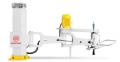

Stone cutting machines are widely used for processing marble, granite, and other stone materials. Regular maintenance is essential for keeping the machine running reliably, reducing unexpected downtime, and extending the service life of key components.
For operators, a daily inspection does not need to be complicated. Several basic checks can identify potential problems before they affect production.
The following maintenance points are commonly used for Wanlong stone cutting machines.
1. Check the V-Belt
Inspect the V-belts regularly to make sure the tension is appropriate and there is no slipping during operation.
The belts should also be checked for signs of aging, cracking, excessive wear, or other visible damage.
If the belt is too loose, too tight, or significantly worn, adjust the tension or replace the belt as required.
A properly tensioned belt helps maintain stable power transmission and prevents unnecessary load on the drive system.
2. Check Diamond Saw Blade Runout
When replacing a diamond circular saw blade, the blade should be inspected for end-face runout before the machine is put back into operation.
For a new saw blade, the end-face runout should not exceed 0.8 mm.
For a re-welded or reconditioned saw blade, the end-face runout should not exceed 1.5 mm.
Excessive runout can cause blade vibration and unstable cutting, and may affect the dimensional accuracy and surface quality of the finished stone.
The blade should therefore be checked carefully after installation rather than relying only on visual alignment.
3. Inspect the Electrical Control Cabinet
The electrical control cabinet should be inspected regularly.
Check the electrical components and wiring terminals for loose screws or connections. Operators should also confirm that switches, relays, contactors, and other control components respond correctly during operation.
Loose electrical connections can lead to unstable machine operation and, in some cases, overheating or component failure.
If an abnormal electrical condition is found, the machine should be stopped and the problem checked by qualified personnel.
4. Follow the Lubrication Schedule
Lubrication should be carried out according to the machine's maintenance requirements.
When oil needs to be added or replaced, use the specified lubricant and follow the recommended lubrication interval and quantity.
Do not assume that adding more oil will provide better protection. Different components may require different lubricants and different oil levels.
Regular lubrication helps reduce friction and wear in moving components and contributes to stable machine operation.
5. Check the Spindle Box for Water Leakage
Inspect the spindle box regularly for signs of water leakage or water entering areas where it should not be present.
If leakage is detected, identify the cause as soon as possible and take corrective action.
Water contamination can affect the lubricant and may lead to premature wear or damage to internal components. After resolving the source of the leakage, the contaminated oil should be replaced according to the machine's maintenance requirements.
This check is particularly important for stone cutting machines that operate with water during cutting.
A Simple Maintenance Routine Can Prevent Bigger Problems
Daily maintenance is often easier and less expensive than repairing a machine after a major failure.
Before starting production, operators can make a quick inspection of the drive system, saw blade, electrical cabinet, lubrication points, and spindle box. Any unusual noise, vibration, leakage, belt slipping, or cutting instability should be investigated rather than ignored.
For stone processing equipment, maintenance should also be adjusted according to operating hours, cutting conditions, and the working environment.
Final Thoughts
A stone cutting machine is a long-term production investment, and proper maintenance plays an important role in protecting that investment.
The basic daily checks include:
V-belt tension and condition
Diamond saw blade runout
Electrical connections and control components
Lubrication and oil condition
Spindle box water leakage
Following these checks consistently can help reduce unexpected downtime, maintain cutting accuracy, and extend the working life of the machine.