

The principles of controlling noise generated by a bridge cutting machine when cutting stone are generally similar to those used for managing industrial noise. Noise can cause disturbance or harm only when three factors coexist: the noise source, the transmission path, and the receiver. Therefore, by controlling one or more of these factors, it is possible to effectively reduce the overall noise level.
However, stone cutting has its own technical characteristics. In practical applications, the final solution must consider multiple factors such as operational requirements, technical conditions, and economic effects to ensure the most effective noise-control strategy.
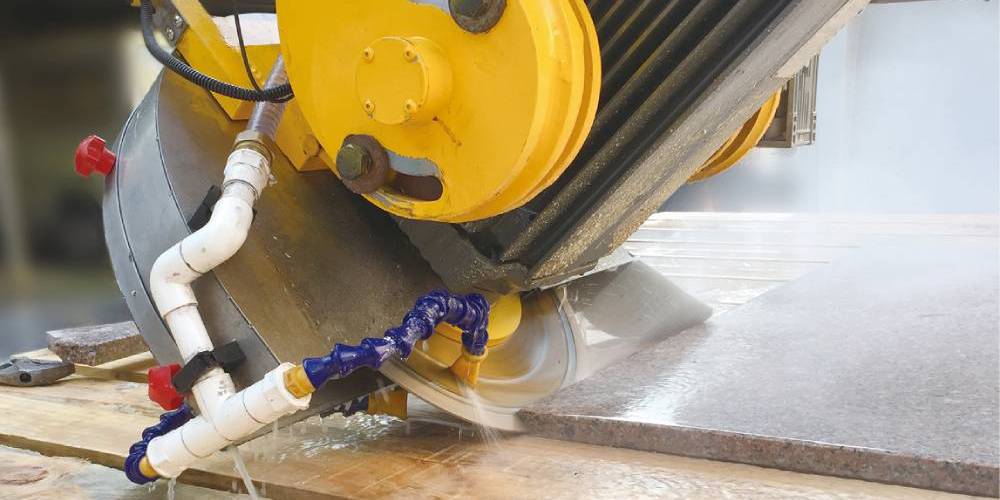
Noise control for bridge cutting machines mainly focuses on the following three aspects:
1. Reducing Noise at the Source
To address the causes of noise during stone cutting, several measures can be taken: improving the manufacturing quality of the bridge cutting machine, enhancing installation precision, optimizing the dynamic balance of rotating components, selecting proper cutting parameters, and designing low-noise structures. Among these methods, reducing saw blade vibration is especially effective for lowering noise at the source.
2. Protecting Workers Exposed to Noise
Although this method is passive and not ideal, it is often used because it is simple and cost-effective—especially when noise reduction at the source is temporarily difficult. The common approach includes providing workers with protective equipment such as earplugs, earmuffs, sound-insulating cotton, helmets, or other personal noise-protection devices to reduce harm to the ears.
3. Blocking or Shielding Noise Transmission
Noise transmission can be reduced through sound insulation, sound absorption, silencers, and other acoustic solutions. Some manufacturers already combine protective safety covers with sound-insulating enclosures on bridge cutting machines to minimize noise exposure for operators.